

You’re new to Bitcoin and want to learn about it. Where do you start?
Most people open YouTube and type something like “Bitcoin explained”. Others try to read the Bitcoin whitepaper (that’s the big, very technical document that explains how Bitcoin works).
Both are fine, but there’s a faster, more hands-on way to learn.
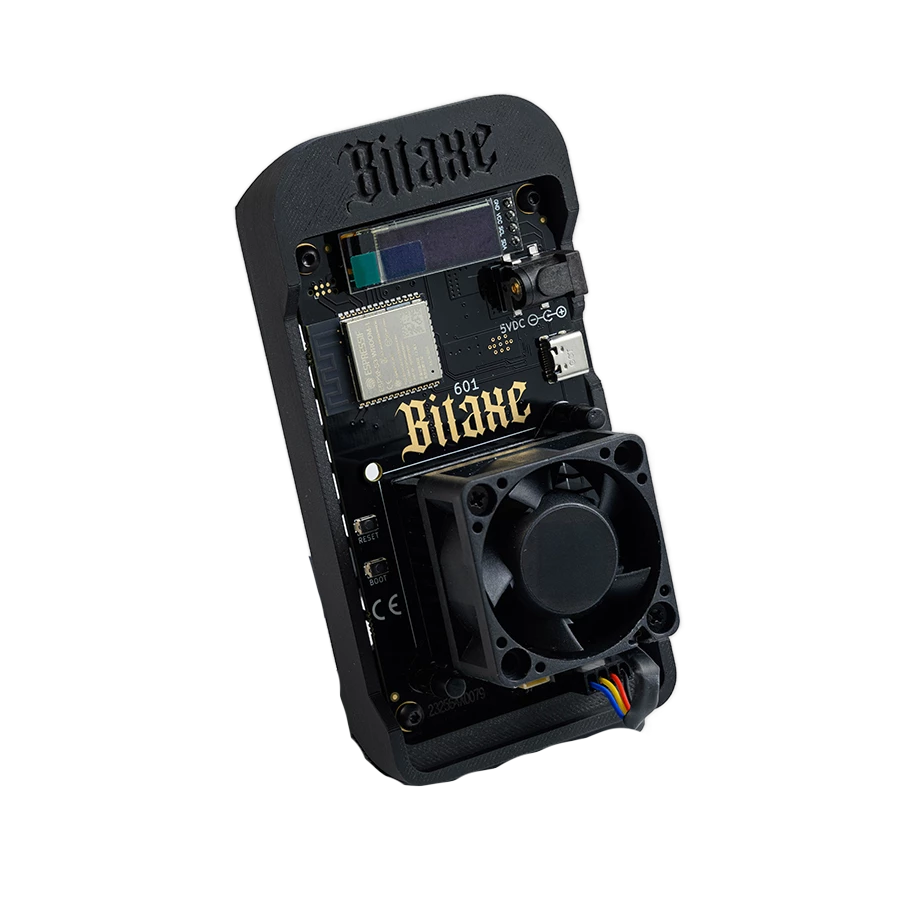
It’s called a Bitaxe.
This small device lets you mine Bitcoin, and while you set it up, you’ll naturally learn how Bitcoin actually works, not just hear a story about it. Think of it like learning how a car works by opening the hood instead of watching a video about engines.
If you want to understand Bitcoin in about 5 minutes, this is the right place.

What Is a Bitaxe?
A Bitaxe is a small Bitcoin miner. It’s not meant to make you rich. Instead, it’s meant to teach you.
When your Bitaxe is running, it is doing the same job as the giant Bitcoin mining machines you see in warehouses, just on a much smaller scale. That’s what makes it perfect for learning.
Step 1: Connecting Your Bitaxe to the Internet
Once you have your Bitaxe in hand, the first thing you’ll do is connect it to Wi-Fi.
Why?
Because Bitcoin lives on the internet. Your Bitaxe needs an internet connection so it can talk to the Bitcoin network.
That network is made up of thousands of computers around the world called nodes.
What Is the Bitcoin Blockchain?
The Bitcoin blockchain is basically a public notebook that records every Bitcoin transaction ever made.
Anyone can read it.
No one can secretly change it.
Here’s a simple example:
- Block 1: JD starts with $50
- Block 2: JD sends $25 to Ashley
- Block 3: JD receives $10
Now:
- JD has $35
- Ashley has $25
That’s it. That’s a ledger.
Bitcoin does the same thing, except instead of dollars, it tracks bitcoin, and instead of one notebook, thousands of computers keep the same copy. And nobody can randomly change values without everyone's approval on the network. You can see this information on a block explorer like this.

Blocks, Transactions, and Hashes
Transactions don’t get added one by one. They get grouped together into something called a block.
Before a block can be added to the blockchain, it needs to be approved.
That’s where mining comes in.
To approve a block, miners have to solve a puzzle. The answer to that puzzle is called a hash.
A hash isn’t exactly a password, it’s more like a fingerprint created by math.
You can’t guess it easily. You have to try… and try… and try again.
What Is Your Bitaxe Actually Doing?
Your Bitaxe is sitting there guessing hashes as fast as it can.
Really fast.
About 1.2 trillion guesses every second. That’s the speed (Image below showing 1.1TH/s which is 1,111 GH/s)
Each guess is your Bitaxe asking the network:
“Is this the right answer?”
Most of the time, the answer is no.
But when any miner in the world finds the right answer:
- A new block is created
- The block is added to the blockchain
- The miner gets rewarded with bitcoin (3.125 BTC)
Your Bitaxe probably won’t find many blocks, and that’s okay.
The goal here is learning, not profit.

What Happens When a Block Is Found?
When a valid block is found:
- It gets sent (broadcasted) to the Bitcoin network
- Other nodes check it
- If it’s valid, they store it forever
Now every node has the same updated ledger.
That’s why Bitcoin works without a central authority.
Why Nodes Matter
Nodes are computers that store the full Bitcoin blockchain.
They all have the same data.
They all check each other.
They don’t trust, they verify.
This makes cheating basically impossible.
If someone tried to lie and say:
“I sent you bitcoin”
But they didn’t actually send it,
it wouldn’t show up on everyone’s blockchain.
No entry = no payment.
Want to learn how to setup your own home Bitcoin node? Check out the blog below.

Why This Is Important
This is what makes Bitcoin special.
There is:
- No bank in charge
- No company controlling it
- No government deciding who gets access
Just math, code, and public records.
Imagine if governments had to use a public ledger like Bitcoin, where everyone could see exactly how tax money was collected and spent.
That’s the power of transparency.
Why Learning With a Bitaxe Works So Well
As you:
- Connect your Bitaxe to Wi-Fi
- Watch it hash
- See blocks being mined
- Learn about nodes and difficulty
You’re not just hearing how Bitcoin works.
You’re participating in it.
And that’s the fastest way to understand Bitcoin.
What Happens After You Learn the Basics?
Once you understand the basics with a Bitaxe, something interesting usually happens.
At first, the Bitaxe is perfect:
- It’s small
- It’s quiet
- It’s easy to understand
- It shows you how Bitcoin really works
But after a while, many people start thinking:
“Okay… I get this now. What’s next?”
That’s when people often start looking at faster mining machines.
Why People Upgrade
The Bitaxe teaches you how mining works:
- Hashing
- Network difficulty (up next!)
- Blocks
- Nodes
- Rewards
Once those ideas click, upgrading feels less scary.
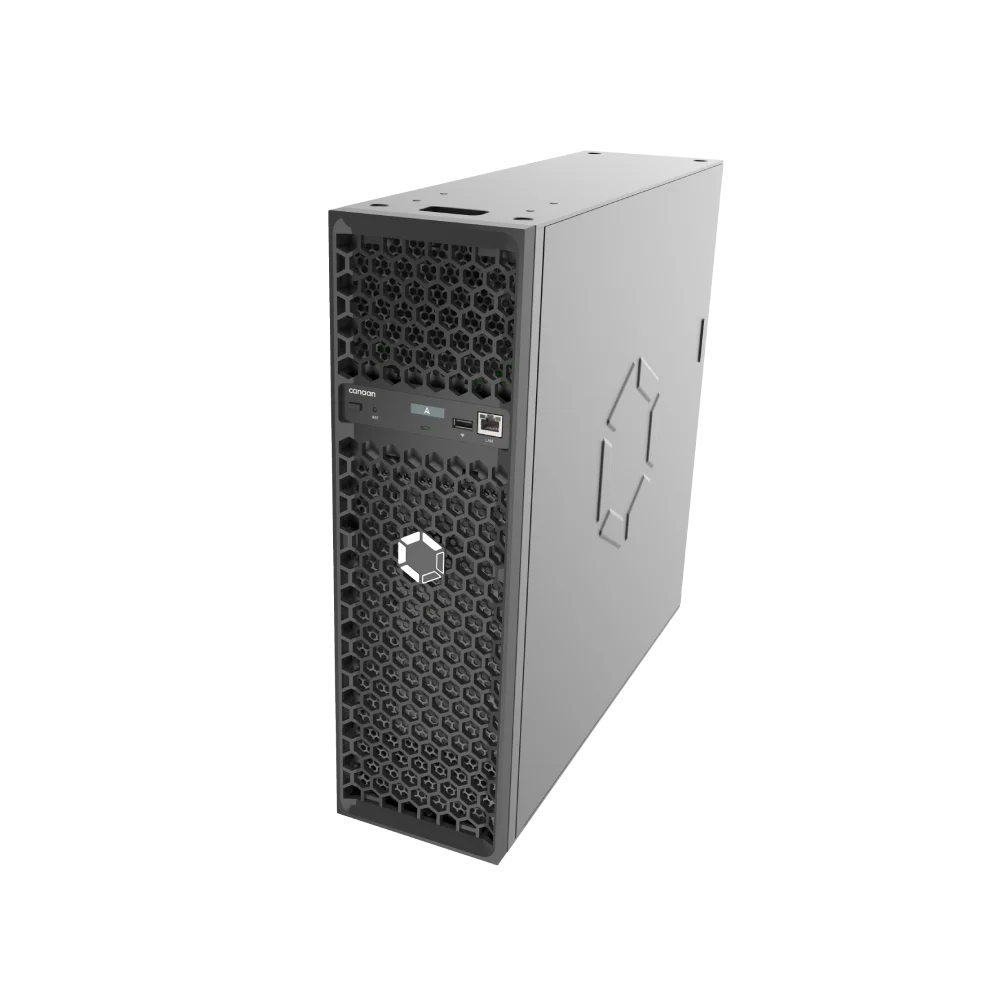
Bigger miners are basically the same thing as a Bitaxe, they just:
- Guess hashes much faster
- Use more electricity
- Make more noise
- Produce more heat
But conceptually, nothing changes.
If you understand your Bitaxe, you already understand:
- A home miner
- A garage setup
- Even a large mining farm
It’s the same process, just scaled up. Look at the difference in odds!


What Is Network Difficulty? (And Why It Matters)
You might notice something called “network difficulty” when looking at your Bitaxe dashboard.
It sounds complicated, but the idea is actually very simple.
Network difficulty is just how hard the Bitcoin puzzle is right now.
Why Does Bitcoin Need Difficulty?
Imagine only one miner existed.
That miner would find blocks instantly.
Now imagine millions of miners all guessing hashes at the same time.
Blocks would be found way too fast.
Bitcoin solves this by adjusting the difficulty.
The Goal: One Block Every 10 Minutes
Bitcoin is designed so that:
- A new block is found about every 10 minutes
- Not faster
- Not slower
Every two weeks (about every 2,016 blocks), the network looks at how fast blocks were found.
- If blocks were found too fast → difficulty goes up
- If blocks were found too slow → difficulty goes down
That’s it.
No human decides this.
No company votes on it.
The code handles it automatically. You can view the current network difficulty here.

How Difficulty Affects Your Bitaxe
When difficulty is higher:
- The puzzle is harder
- It takes more guesses to find a block
- Small miners find blocks less often
When difficulty is lower:
- The puzzle is easier
- Blocks are found with fewer guesses
Your Bitaxe doesn’t change what it’s doing.
It always:
- Guesses hashes
- As fast as it can
- Non-stop
The only thing that changes is how hard the target is to hit.
The Bitaxe Is a Gateway, Not the End
Most people don’t start mining Bitcoin with a loud, expensive machine.
They start with something simple.
The Bitaxe acts like:
- Training wheels
- A learning lab
- A safe first step into Bitcoin mining
Some people stop there, and that’s perfectly fine.
Others go deeper once they feel confident.
Either way, the Bitaxe does its job:
It teaches you how Bitcoin actually works.
Final Thought
You don’t need the biggest or fastest miner to understand Bitcoin.
But once you do understand it,
upgrading becomes a choice, not a mystery.
And for many people, the Bitaxe is where that journey begins.
Check out this blog to not make mistakes between pool or solo mining.