

A beginner-friendly guide to understanding mining odds, rewards, and why switching coins matters.
If you’re getting into solo mining, Bitcoin is usually where it starts.
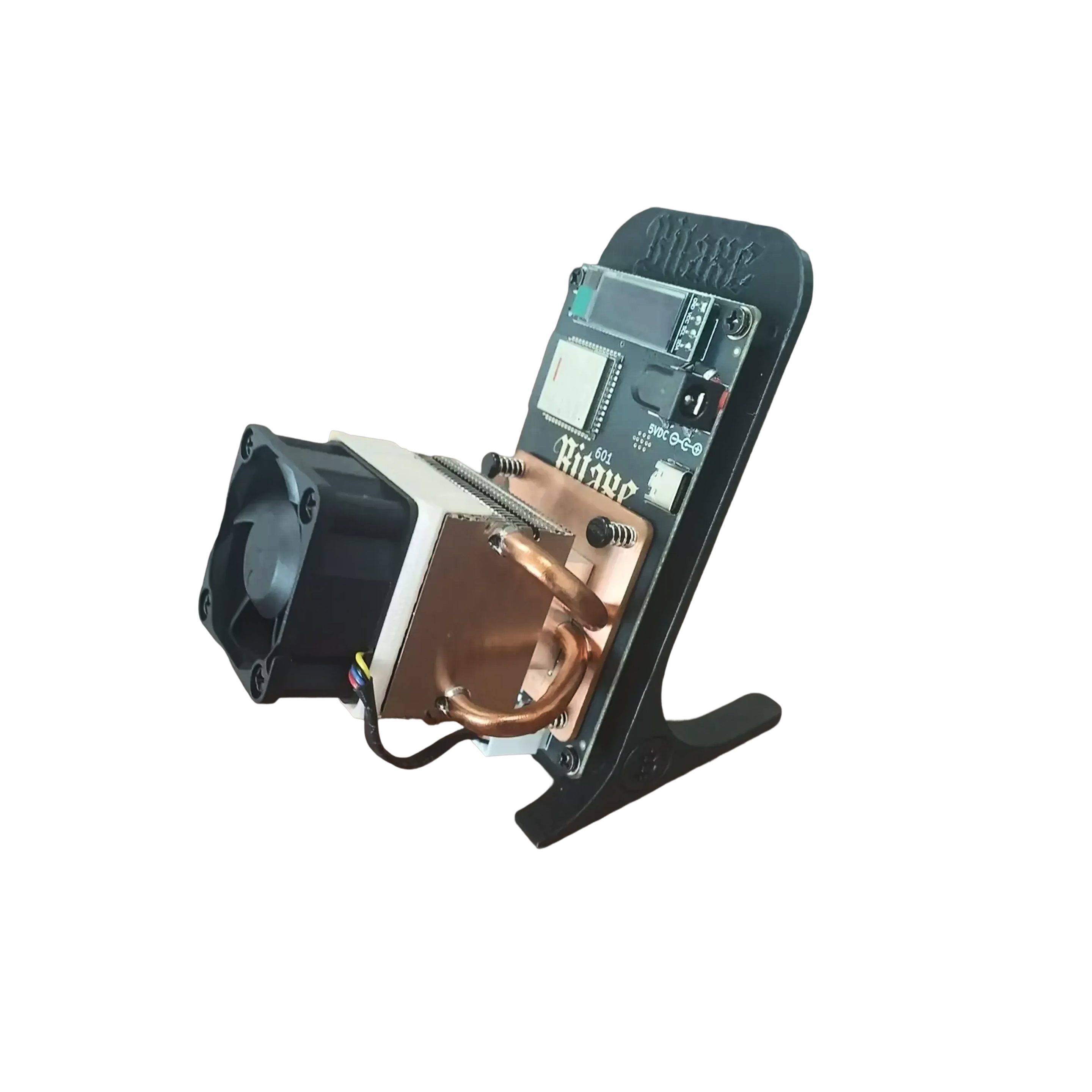
And most of the time, solo mining SHA-256 means mining Bitcoin — especially with entry-level lottery miners like the Bitaxe v2 — with familiar alternatives like Bitcoin Cash (BCH) and Fractal Bitcoin (FB) sitting in the same category.
That part hasn’t changed.
What does change are the odds.
Solo mining isn’t really about names or narratives. It’s about probability over time. And once in a while, even within SHA-256, another network lines up better than Bitcoin for a short stretch.
That’s what happened with Quai-SHA (QUAI) in the late December 2025 to January 2026 period. During that window, tools like WhatToMine showed QUAI briefly ahead of Bitcoin on Rev. Profit, a commonly used proxy for expected value in solo mining.
But because hashrate, difficulty, and rewards moved, and for a moment, the math leaned somewhere else.
That same way of thinking carries over to other algorithms too. It’s why some miners who understand SHA-256 odds also look at Scrypt solo mining, using dedicated hardware like the Hammer DC-06. Different algorithm, same logic.
Different algorithm, same logic.
And occasionally, even within SHA-256, another network offers better odds than Bitcoin for a short window. That’s exactly what we saw over the last 30 days.
But because solo mining is a math game, and sometimes the math sometimes temporarily favours a different coin at a different time. Most of the time, the odds are similar, but in the last 30 days, Quai surpassed Bitcoin by 40%.

What Solo Mining Actually Is (Simple Version)
Solo mining means:
• Your miner works alone
• You either find a block or you don’t
• If you win, you keep 100% of the reward
No smoothing. No sharing.
Bitcoin solo mining offers a massive reward but extremely rare wins. Smaller SHA-256 networks offer smaller rewards, but the game resolves more often.
That tradeoff is the entire strategy.
Solo mining is simple at its core. Your miner is making guesses. When it guesses correctly, it finds a block and earns the full reward. No pooling, no sharing — just you versus the network.
Bitcoin solo mining is attractive because the reward is massive. But it also has the highest competition on Earth. That means the odds of finding a block are extremely low, even with a perfectly configured setup. Many solo miners never hit a block at all — not because they’re doing something wrong, but because the game resolves very slowly.
This is where most beginners get discouraged.
Some of the main SHA-256 networks solo miners watch are:
-
Bitcoin (BTC) — largest reward, toughest odds
-
Quai-SHA (QUAI) — smaller reward, less competition
-
Fractal Bitcoin (FB) — experimental dynamics
-
Bitcoin Cash (BCH) — a middle ground
Solo Mining Bitcoin (BTC)
Block reward: ~$266,000
Odds of finding a block: ~1 in 4.9 million per day
Mining Bitcoin solo is essentially a lottery ticket.

Solo Mining Bitcoin Cash (BCH)
Block reward: ~$1,700
Odds of finding a block: ~1 in 31,000 per day
The reward is smaller, but the odds are dramatically better.

If you win, it’s life-changing, but the odds are extremely slim.
Same algorithm. Same hardware. Different odds.
Most of the time, Bitcoin still wins on long-term stability. But over the last 30 days, Quai-SHA showed roughly 40% higher expected value for solo miners under certain conditions. That doesn’t mean QUAI replaced Bitcoin. It means that for a window of time, the math favored a different SHA-256 table.
This brings us to expected value, which sounds complex but really isn’t.
Expected value simply answers one question:
“If I played this game over and over, what should I expect on average?”
It depends on:
- How big is the reward is
- How often do you realistically have a chance to win
Bitcoin offers a massive prize, but extremely rare wins. Smaller SHA-256 networks offer smaller prizes, but the game resolves more often.
For example, a solo miner on a smaller SHA-256 network like QUAI might be playing for a ~$1,500 block reward with odds closer to 1 win in 4,000 attempts. Instead of waiting years for a single outcome, you’re choosing odds that resolve more frequently.
This is exactly where small, efficient solo miners like Bitaxe make sense.
Bitaxe miners are designed for this style of mining. They’re low-power, always-on, quiet enough for home use, and perfect for solo strategies where patience and probability matter more than brute force. You’re not trying to overpower industrial farms; you’re choosing networks where your hash actually has a meaningful chance to matter.
One of the biggest advantages solo miners have today is visibility. Tools like WhatToMine make it easy to compare SHA-256 networks side by side and see where the odds currently sit.
On WhatToMine, the key column to understand for solo mining is Rev. Profit.
Rev. Profit is best thought of as:
The expected value of solo mining that coin over the next 24 hours, based on current conditions.
It already factors in:
- block reward
- network difficulty
- total competition (hashrate)
-
current price
In plain terms, it answers:
“If I keep mining this solo for a while, where does the math say my odds look best right now?”
Most of the time, Bitcoin sits right at the baseline, and that’s exactly what you expect. Bitcoin is the reference point for SHA-256 solo mining.
But occasionally, like over the last 30 days, another SHA-256 network (such as Quai-SHA) shows a higher Rev. Profit. That doesn’t mean Bitcoin stopped making sense. It simply means that for that moment in time, the odds temporarily favoured a different network.
This is why learning how and when to switch pools or targets is such a powerful skill for solo miners. You don’t need new hardware. You don’t need to overclock aggressively.
You just need to know where to point your hash when conditions change.
We walk through this step-by-step in “Mine Smarter: 163% Better Odds Than Bitcoin”, where we show exactly how solo miners switch pools and networks as the odds shift. If you’re serious about solo mining, that guide is essential — and it’s worth revisiting as conditions evolve.
Before committing to any approach, it’s also critical to understand the difference between pool mining and solo mining, because confusing the two can be extremely expensive. That’s why we strongly recommend reading “Pool Mining vs Solo Mining — Don’t Make This $300,000 Mistake” to understand what you’re actually optimizing for.
For beginners, especially, the goal isn’t to perfectly time the “best” network. The goal is to learn how solo mining works in practice. Smaller SHA-256 networks often provide faster feedback, clearer signals, and a much better learning curve than Bitcoin alone.
This is also where home miners shine. Solo mining isn’t about scale — it’s about consistency. If you’re choosing hardware, our “Top 5 Home Miners of January 2026 (Overclocking Edition)” breaks down which miners make sense for learning, experimenting, and long-term use — and why Bitaxe continues to stand out for solo strategies.

Bitcoin is still the anchor of SHA-256 solo mining. That hasn’t changed. But being a good solo miner means recognizing when conditions temporarily favor a different approach — and knowing how to respond without emotion or hype.
Graduate when you’re ready
Once you understand:
• how solo mining works
• how to read Rev. Profit
• how and when to switch targets
You can graduate to bigger ASICs with confidence.
The strategy is the same.
The algorithm is the same.
Only the scale changes.
Skipping this learning phase is how people make expensive mistakes — which is why we strongly recommend reading “Pool Mining vs Solo Mining — Don’t Make This $300,000 Mistake” before scaling up
⸻
The Smart Way to Start
Solo mining isn’t about chasing the biggest reward.
It’s about choosing odds you understand.
Lottery miners let you:
• participate without pressure
• learn without guessing
• build confidence before scaling
Bitcoin is still the anchor.
SHA-256 still makes sense.
And when the odds shift, you’ll know what to do.
Start small. Learn the game. Graduate when it matters.