You may have heard the name before, “lottery miner” for Bitcoin, and weren’t totally sure what it meant. Let's break it down.
Basics: How Bitcoin mining works
Let’s start with a simple way to picture mining.
Bitcoin gets created through mining with devices such as the Bitaxe. What does “mined” mean? Imagine there’s a box sitting out in the open that holds 3.125 bitcoins inside it.
Now here’s the fun part:
Anyone can open that box and take the Bitcoin inside… but you need the password.
That password is 64 characters long, something like:
E9873D79C6D87DC0FB6A5778633389F4453213303DA61F20BD67FC233AA33262
So what do miners actually do?
They sit there guessing a ton of passwords, super fast. Eventually one miner guesses it right, opens the box, grabs the coins, and then the whole thing resets with a brand-new password that everyone races to guess again.
That’s mining at the core.
Pro Tips: Every 4 years, that box gets cut in half. So on April 10, 2028, the box will only hold 1.5625 bitcoins. Same box, just fewer coins. This is what causes Bitcoin to get harder to mine.

Solo mining (lottery) vs pool mining
What we just described is basically solo mining, also called lottery mining. You mine alone, and if you guess the password first, you get everything in the box. Full win.
Pool mining is different.
Instead of guessing passwords alone, you join a big team where everyone guesses together.
If someone in the pool hits the right password, the box gets opened, but you split the reward with everyone who helped.
And the split isn’t equal. It’s based on work.
So if one person guessed 10 passwords (or 10x the amount of guesses) and you guessed 1, they did more work, so they get a bigger slice of the bitcoins than you do.
Solo = huge win but rare.
Pool = smaller wins but more consistent.

How to increase your password-guessing speed
Password guessing speed in Bitcoin is called hashrate.
You can buy different mining machines with different hashrates, and it’s pretty straight-forward:
- More hashrate = more guesses per second
- More hashrate = more expensive machine
- More hashrate = better odds of opening the box
Example:
Bitaxe Gamma (popular lottery miner)
- Hashrate: 1.2 TH/s
- That means it guesses about 1,200,000,000,000 passwords per second
- Costs around $184
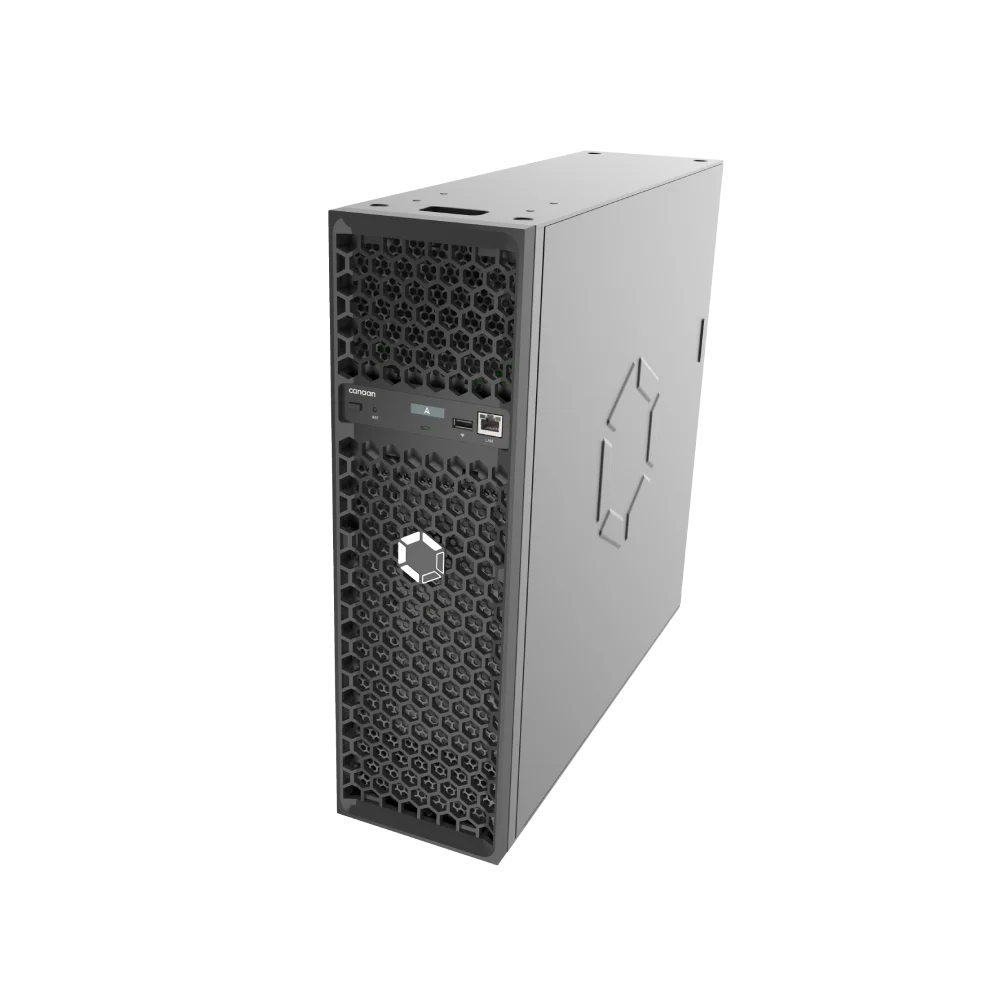
Avalon Q
- Hashrate: 90 TH/s
- That’s 90,000,000,000,000 guesses per second
- Costs around $1900
So yeah, simple formula:
the faster it guesses, the more you pay, and the better your chances.

How to calculate your chances
Want to know your odds of guessing the password and taking the box? There’s a calculator for that.
The folks at Moken built one that makes this easy.
You can use it here.
All you do:
- Pick your device from the dropdown
- Enter your address
The address part is just so it can estimate electricity costs. Faster machines usually burn more power, so it’s good to know what you’re signing up for.
As of today: Nov 25, 2025
- Bitaxe Gamma: about 1 in 6.3 million per day to hit a block and earn 3.125 BTC
- Avalon Q: about 1 in 84,000 per day to hit a block and earn 3.125 BTC
So yes, spending more boosts your odds a lot.

Quick recap
At the end of the day, a home lottery miner is just a little device that sits there guessing Bitcoin “passwords” 24/7, hoping to hit a block.
Think of it like an unlimited lottery ticket that keeps playing itself over and over.
They’re usually quiet, low power, and honestly just fun. You wake up one day and maybe you hit the box for 3.125 bitcoins. Wild.
If you’re looking to grab your first home lottery miner, there are a bunch of options out there, but I’d suggest starting with a Bitaxe, especially if you’re just dabbling or want something simple to learn on.