

Home miners don't run their machines the way they arrive. They tune them — like gaming rigs, like project cars. Here's what that actually looks like.
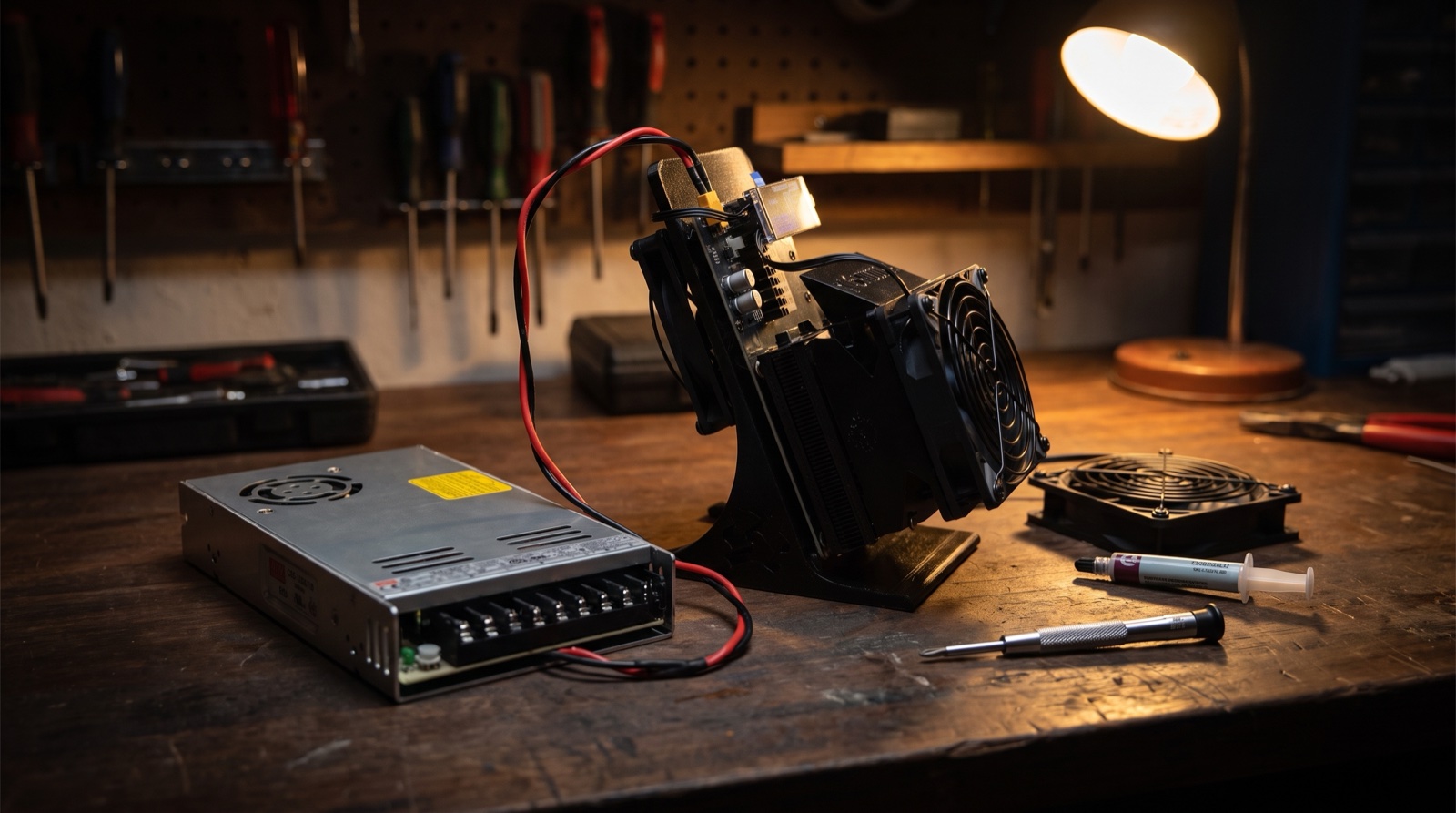
The workbench where stock numbers go to die.
There's a specific kind of person who reads a spec sheet as a starting bid.
We run recorded research interviews with our customers, and a pattern shows up in call after call: almost nobody with more than one miner runs it at stock. They swap fans. They add heat sinks. They nudge voltages one notch at a time and watch the temperature like a hawk. And the numbers they get are real.
4.8 → 6.5, one long Saturday
A customer in Georgia bought a NerdQaxe++ — rated at 4.8 terahash out of the box. Here's his machine now, in his own words:
"It's a 4.8. I got it overclocked to 6.5. Noctua fan on the back… a 180-watt PSU I had to upgrade… to support all the extra power."
— HD customer, Georgia
That's 35% over stock. And the part he's proudest of isn't the hashrate — it's the thermals:
"My temperatures are down, fans only at 55 percent. Chip at fifty-five degrees… I can't even get them to sixty. The cooling is really good."
— same customer
He didn't stop at the hardware. His pool connection annoyed him — about 100 milliseconds of lag to the public solo pools. So he built his own. On a Raspberry Pi. With an unusual assistant:
"I decided to make my own pool. Got a Pi 5, and did it all through ChatGPT. He set it up for me."
— same customer
When a firmware release turned out to be incompatible with the Pi 5, he recompiled it himself — three and a half hours, ChatGPT diagnosing alongside. His pool now answers in 2 to 4 milliseconds. This is a hobbyist, in a spare room, in Georgia.
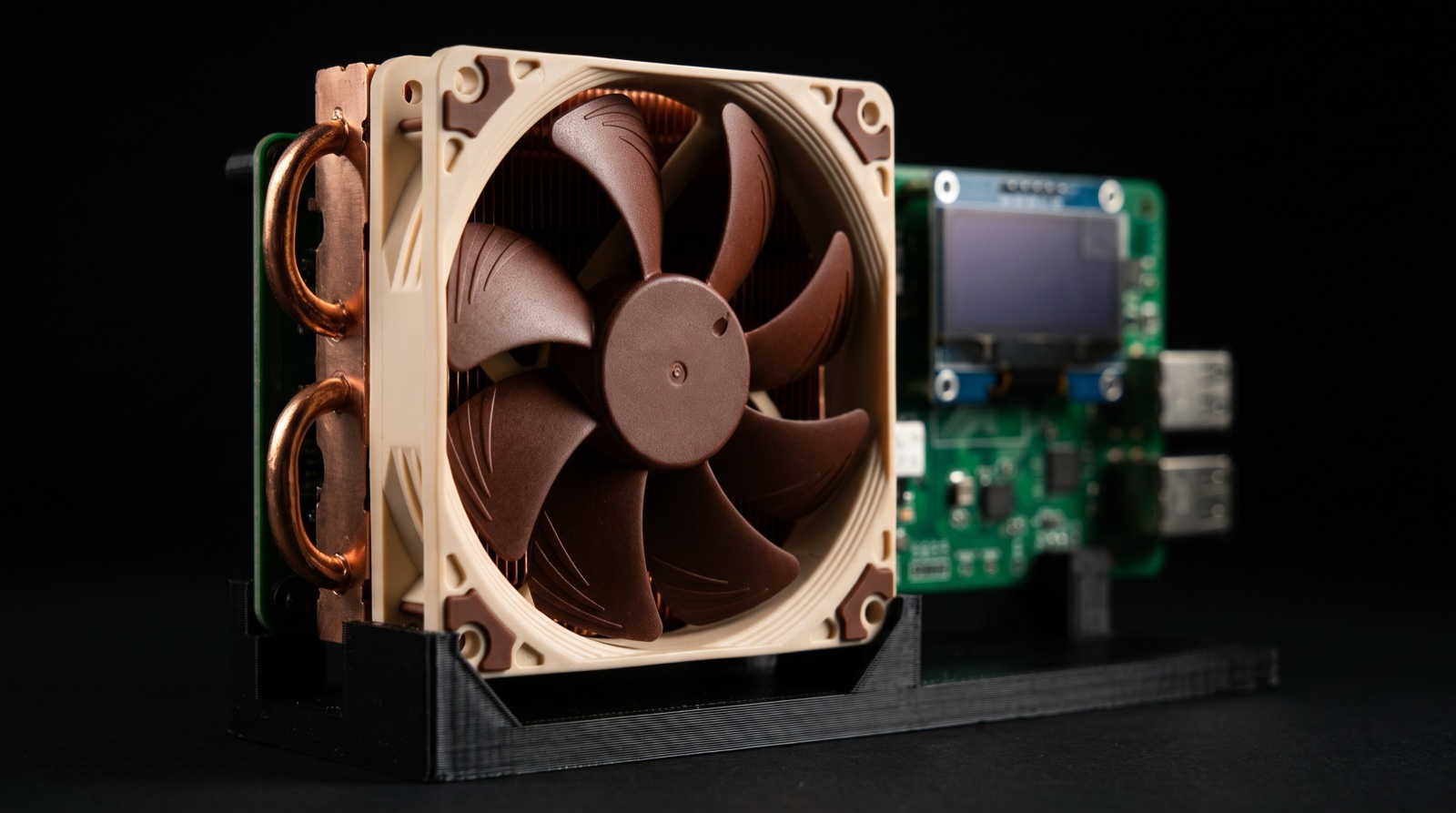
If you know why this fan is beige and brown, you already have the skills.
The skills come from PC building
Here's the thing that surprises outsiders: none of this requires a mining background. A customer in Romania tuned his $95 Bitaxe Gamma from 1.2 terahash stock to 1.6 — fans swapped for Noctuas (quiet enough that the miner lives in his bedroom), thermal pads, power settings. Asked where he learned it:
"Google. And previous experience with the PC overclocking."
— HD customer, Romania
That's the whole secret. If you've ever built or tuned a gaming PC, you already have the muscle memory. Same fans, same thermal paste, same voltage logic — pointed at a machine that plays the Bitcoin lottery instead of pushing frames.
The entry-level version doesn't even need the courage. A customer in California described his approach:
"I've done some extra cooling on the Bitaxes — the jet packs. Nothing major like flashing custom firmware. Just messing with the voltage to try to get the hash rate up. Very mild — I don't wanna burn out the units."
— HD customer, California
Extra cooling, a little voltage, stop before it gets scary. That's a completely respectable tune.
Why bother?
A veteran of six-plus years — five machines, manual fan curves, a personal rule to keep every voltage regulator under 59°C — put the whole philosophy in one sentence:
"Ideally, I wanna get the most amount of hash rate with the lowest amount of power usage."
— HD customer, 6+ years mining
Maximum hashrate per watt. That's the entire game. Some people play it in Excel, some in AxeOS settings, one guy plays it with a screwdriver and a bag of copper heat sinks. The machine is open source — hardware and firmware — which is exactly why this is possible at all. Nothing is locked. Nothing voids some imaginary seal. The community that builds these things expects you to mess with them.
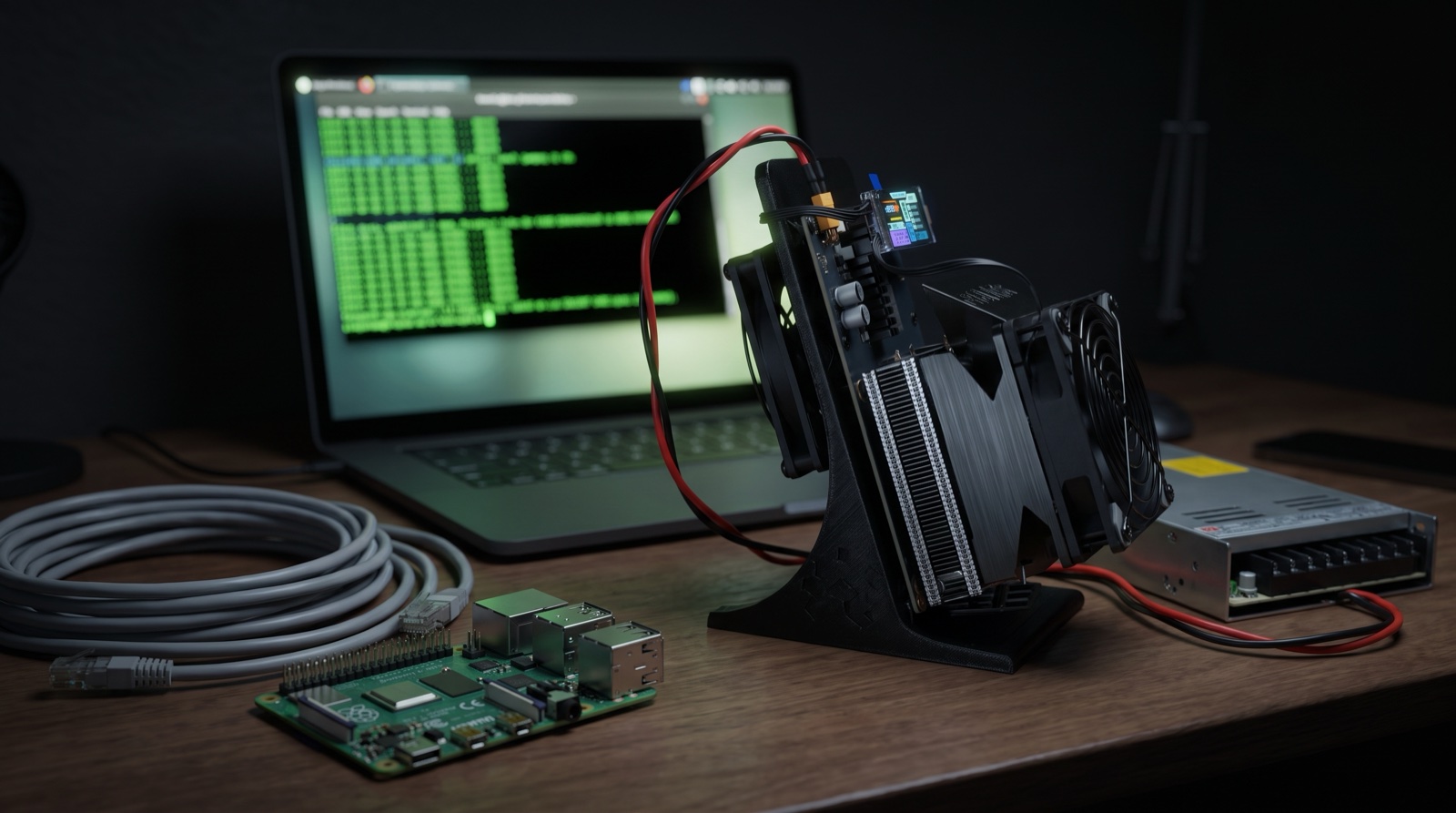
His own pool, on a Raspberry Pi, with ChatGPT as the IT department.
The honest caveats
Those numbers above are individual results, not promises. Overclocking draws more power, makes more heat, and — as our cautious Californian says — pushed too far, it can shorten a machine's life. The 6.5-terahash NerdQaxe runs on an upgraded PSU for a reason. Start mild, watch your temps, and treat other people's numbers as inspiration, not spec.
But if the itch is already there — if you read "4.8 TH/s" and immediately wondered what it could do — you're the person this hobby was built for.

NerdQaxe++ (6 TH/s)
$249 · the platform the Georgia build started from · ships with the metal Mean Well power supply

Bitaxe Gamma 601 V2
$95 · ~15W · open source · Noctua-friendly, bedroom-quiet, endlessly moddable
Customer quotes come from our recorded post-purchase research interviews, lightly edited for clarity and shared without names. Tuning results are individual customers' reports — not manufacturer specifications.