

Bitcoin mining hardware has never been more accessible, but choosing the right miner can make the difference between breaking even and making a profit. In this post, we’re taking a close look at two of the most talked-about home SHA-256 ASIC miners for 2025:

We’ll dive into their specs, performance, and how to calculate true mining cost so you can decide which machine fits your goals and electricity budget. Both machines do the same thing, they mine bitcoins.
When comparing mining hardware like the Fluminer T3 and the Canaan Avalon Q, it helps to understand the companies behind them, because their history and approach shape how their products perform today.
Canaan, The Pioneer of ASIC Bitcoin Mining
Canaan Inc. (also known as Canaan Creative) is one of the oldest and most influential mining hardware manufacturers in the world. The company was founded in 2013 by N.G. Zhang and quickly made a name for itself by launching the world’s first ASIC-based Bitcoin miner, a breakthrough that dramatically increased mining efficiency compared with earlier GPU and FPGA rigs.
Over the last decade, Canaan has grown into a globally recognized company with products used by both hobbyists and industrial miners alike. In 2019, Canaan went public on the Nasdaq, becoming one of the very few major Bitcoin mining hardware companies with a public listing.
Unlike many competitors, Canaan has also experimented with broader technologies, from AI chips to green energy initiatives, such as pilot projects that convert flared natural gas into mining power.
Today, the Avalon series, including the Avalon Q, represents years of refinement and scale, with a reputation built on reliability and innovation across thousands of deployments worldwide.

Fluminer, A Newer Player with Modern Design Focus
In contrast, Fluminer is a much younger entrant into the mining hardware space. Based in Shenzhen, China, the company has built its strategy around modern ASIC design, aggressive energy efficiency, and global expansion.
Fluminer’s mission emphasizes high performance with user-friendly operation, catering especially to miners who want plug-and-play rigs that balance power with practicality.
Unlike Canaan, which has decades of industry history and a mixed portfolio of hardware and mining operations, Fluminer has focused narrowly on delivering efficient, competitively priced miners and expanding its reach in markets across North America, Europe, and Asia.
Their lineup, including the Fluminer T3, reflects this philosophy: strong SHA-256 performance with energy efficiency that rivals older legacy brands and newer competitors alike.

Why This History Matters
- Canaan’s legacy: Pioneered the ASIC mining revolution and has deep experience across mining ecosystems, including hardware, operations, and even energy innovation.
- Fluminer’s drive: A newer brand with a performance-driven mentality, built for miners who want efficiency and simplicity without decades of legacy tech baggage.
So when you’re comparing machines like the Avalon Q and Fluminer T3, you’re not just comparing specs, you’re comparing two very different approaches to mining hardware development.
Miner Overview: Specs That Matter
Let’s start with the raw numbers, the baseline specs you need to compare.
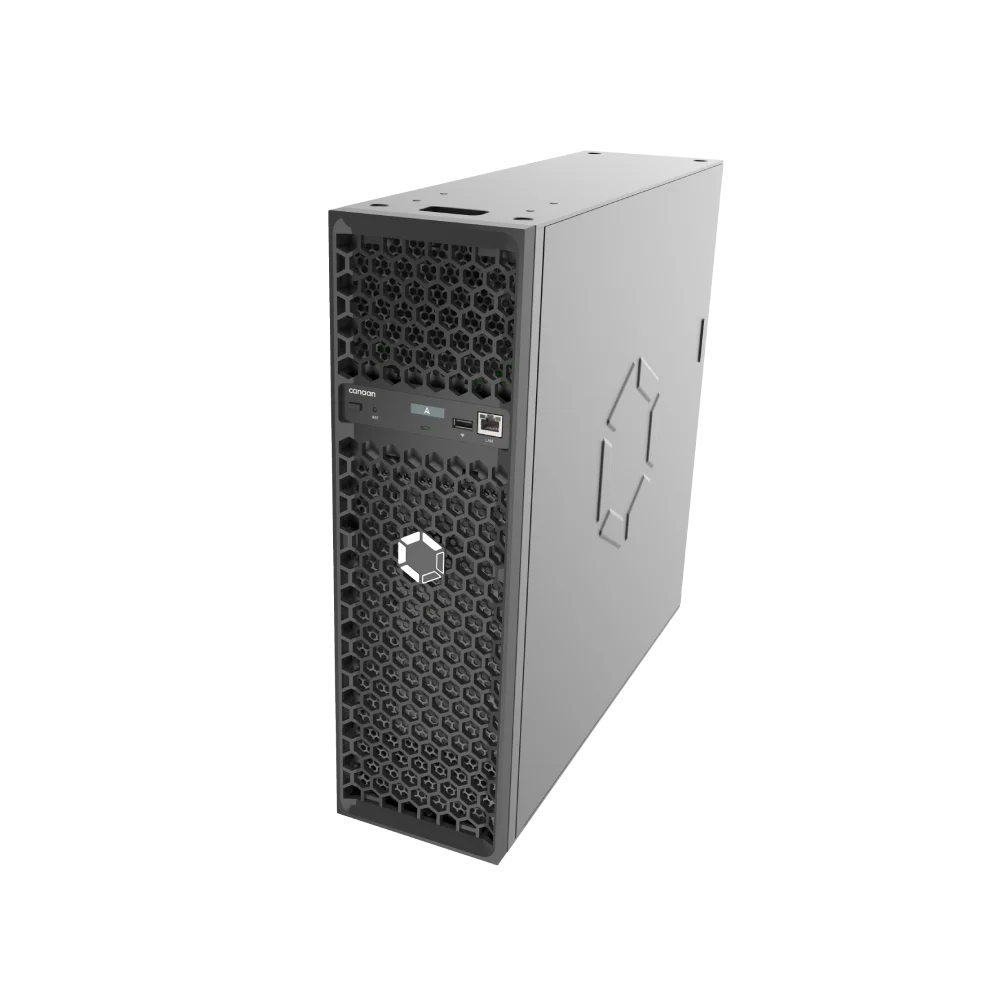
Canaan Avalon Q
The Avalon Q is a mid-range SHA-256 ASIC miner from Canaan, built for both home and small-scale mining environments.
- Hashrate: 90 TH/s SHA-256
- Power: ~1674 W
- Efficiency: ~18.6 J/TH
- Cooling: Air cooling, optimized for stability
- Use Case: Home miners, small setups
This model strikes a balance between hash power and energy consumption, solid but not bleeding-edge in efficiency.

Fluminer T3
The Fluminer T3 steps up the performance with a higher hashrate and better efficiency:
- Hashrate: 115 TH/s SHA-256
- Power: ~1700 W
- Efficiency: ~14.78 J/TH
- Cooling: Air, compact design
- Use Case: Home OR compact rack deployments
The T3’s improved efficiency and higher hashrate make it more competitive in raw mining performance.

Quick takeaway:
The Fluminer T3 produces more hash power for slightly more electricity, and does so more efficiently. That means potentially higher profits over time, especially if electricity isn’t free.
Miner Profitability Snapshot
Based on current mining data and average electricity costs:
Estimated daily profit (example, $0.08/kWh)(pool mining):
- Fluminer T3: ~$1.30/day
- Avalon Q: ~$0.34/day
That’s a big difference over months and years, but remember: current profitability changes day to day with Bitcoin price, mining difficulty, and hash rate.
Lottery mode, to earn 3.125 BTC around 270,000$ USD with today's prices.
- Fluminer T3: ~1 in 64,000/day
- Avalon Q: ~1 in 81,000/day
Want to learn how lottery mining works? Check out this blog.

How to Calculate Your Operation Real Costs
Here’s the framework so anyone reading can evaluate any miner, not just these two.
Step 1, Convert Power Draw to kW
Most miners list wattage. Convert to kilowatts:
Power (kW) = Watts ÷ 1000
- Avalon Q(1674w) = 1.674 kW
- Fluminer T3(1700w) = 1.700 kW
Step 2, Daily Electricity Usage
Multiply power (kW) by hours per day:
Daily kWh = kW × 24
- Avalon Q: 1.674 kW × 24 = 40.18 kWh/day
- Fluminer T3: 1.700 kW × 24 = 40.8 kWh/day
Step 3, Electricity Cost Per Day
Multiply daily kWh by your local rate (example: $0.08/kWh):
Daily Cost = Daily kWh × $ per kWh
- Avalon Q: 40.18 × $0.08 = $3.21/day electricity
- Fluminer T3: 40.8 × $0.08 = $3.26/day electricity
Step 4, Determine Revenue
Check what your miner earns per day at your hashrate, this depends on network difficulty and coin price. You can use mining calculators (e.g., ASIC Miner Value, Miningnow or Moken) for this.
If electricity was FREE:
- Avalon Q: Makes about 3.55$/day
- Fluminer T3: Makes about 4.56$/day
But most of the time electricity is not free. So take the numbers and minus their electricity costs.
- Avalon Q: Makes about 3.55$/day - $3.21/day electricity = .34$ profit per day
- Fluminer T3: Makes about 4.56$/day - $3.26/day electricity = 1.3$ profit per day
Cost Per Terahash: A Useful Metric (Quick napkin math)
You can also evaluate hardware by cost per terahash:
Cost per TH = Miner Cost ÷ Hashrate (TH/s)
Example:
If the Fluminer T3 costs $1700 and does 115 TH/s:
- $1700 ÷ 115 = ~$14.78 per TH
Do the same for the Avalon Q:
- $1700 ÷ 90 = ~$18.88 per TH
You are paying about 21.7% more per TH, which is huge when you start to scale. The T3 is a much better value, if they are the same cost.
Which Miner Should You Pick?
Choose the Fluminer T3 if:
- You want higher hashrate
- You value energy efficiency
- You’re thinking long-term profitability
Choose the Avalon Q if:
- More silent than the T3, if placing in an living environment.
- Canaan is a long term proven company. (Great support)
Bottom Line
There’s no one-size-fits-all answer, but now that you know how to:
- Compare raw specs
- Calculate electricity cost
- Work out cost per terahash
- Estimate daily profit
Then, you can make the best decision for your crypto mining goals.