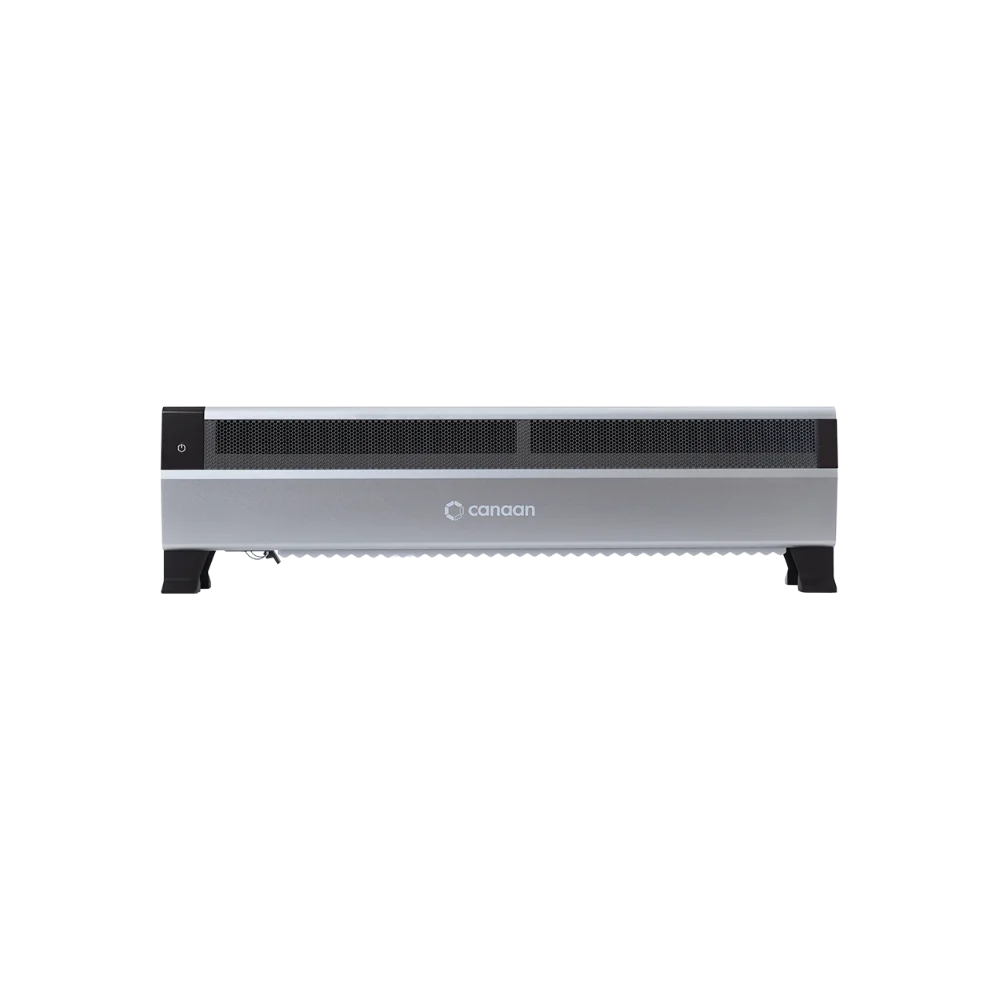
Canaan Avalon Mini 3 Home ASIC vs Traditional Space Heater
This guide will explain why some people are choosing a Mini 3 home ASIC miner instead of a traditional electric space heater, and when that decision actually makes sense.
The Mini 3 is a small home ASIC that consumes around 800 watts, which puts it right in the same category as many electric heaters. Once people realize that, the comparison becomes unavoidable.
At that point, the question isn’t “why would I mine at home?”
It becomes “why would I heat my space without getting anything back?”
Power Consumption: Surprisingly Similar
Most electric space heaters pull between 750W and 1500W. The Mini 3 sits comfortably at the lower end of that range.
From a power standpoint:
- A space heater converts electricity into heat
- A Mini 3 converts electricity into computation and heat
In both cases, you are paying for electricity. The difference is that one device produces heat only, while the other produces heat plus mining rewards.
This is the core reason people even consider this comparison.

Heat Output: Heat Is Heat
An important thing to understand is that nearly 100% of the electricity used by an ASIC becomes heat. There is no magic loss. Fans, chips, power supplies, all of it ends up as thermal energy in the room.
That means an 800W Mini 3 produces roughly the same amount of heat as an 800W electric heater.
If your goal is to warm:
- A bedroom
- A home office
- A garage
- A basement
- A workshop
Both devices accomplish the same thing.
Upfront Cost vs Long-Term Reality
This is where the comparison often gets misunderstood.
A traditional electric space heater is cheap upfront. You can buy one for very little money, plug it in, and it works immediately. But from that moment on, it only consumes money. Every hour it runs is pure expense, with no mechanism to recover any of that cost.
The Mini 3 is different. It costs more upfront, there’s no denying that. You are paying for specialized hardware, not just a heating element. However, unlike a heater, the Mini 3 has a path to paying itself back over time.
During winter months, when the unit would be running anyway for heat:
- The electricity cost would exist regardless
- The heat replaces what a heater would provide
- Mining rewards accumulate continuously
Over several months of winter operation, those rewards can offset a portion of the initial purchase price. A standard heater will never do that. After one winter, or five winters, it is still just an expense.
This doesn’t mean the Mini 3 guarantees profit. It means that when you already need heat, the ASIC has the potential to reduce the long-term cost of staying warm, while a heater locks in a permanent loss.
That’s the real trade-off:
- Lower upfront cost, guaranteed long-term expense
- Higher upfront cost, with the possibility of partial or full payback over time
For people heating a space every day throughout winter, that distinction matters more than the sticker price.

Noise: The Trade-Off
This is where space heaters usually win.
Most electric heaters are:
- Silent or nearly silent
- Designed for living spaces
ASIC miners use fans, and fans make noise. The Mini 3 is quieter than full-size ASICs, but it is still louder than a heater.
This is why placement matters. People who use Mini 3 units successfully usually put them in:
- Home offices
- Garages
- Basements
- Utility rooms
If you need absolute silence, a heater makes more sense. If moderate fan noise is acceptable, the Mini 3 becomes viable.
Reliability and Runtime
Space heaters are often turned on and off. ASIC miners are designed to run 24/7.
That means:
- Consistent heat output
- No cycling
- No thermostats clicking on and off
For people who want steady background heat during winter, this is actually a benefit.
Safety and Mindset
From a safety standpoint, both devices require basic precautions:
- Proper electrical circuits
- Clear airflow
- No flammable materials nearby
Psychologically, the Mini 3 feels different. People don’t view it as “wasting electricity” the same way they do a heater. It feels productive. That mindset alone is enough to push some people to try it.

When a Mini 3 Makes Sense
A Mini 3 is a good alternative to a space heater if:
- You already need heat
- You can tolerate some fan noise
- You want to offset heating costs
- You have stable power and internet
If none of those apply, a heater is simpler.
Final Thoughts
In winter, the Mini 3 stops being “just a miner” and starts behaving like a paid space heater.
You are going to spend money to stay warm anyway. Some people are simply choosing to get a little bit back while they do it.
That’s not for everyone, but for the right setup, the comparison isn’t crazy at all.